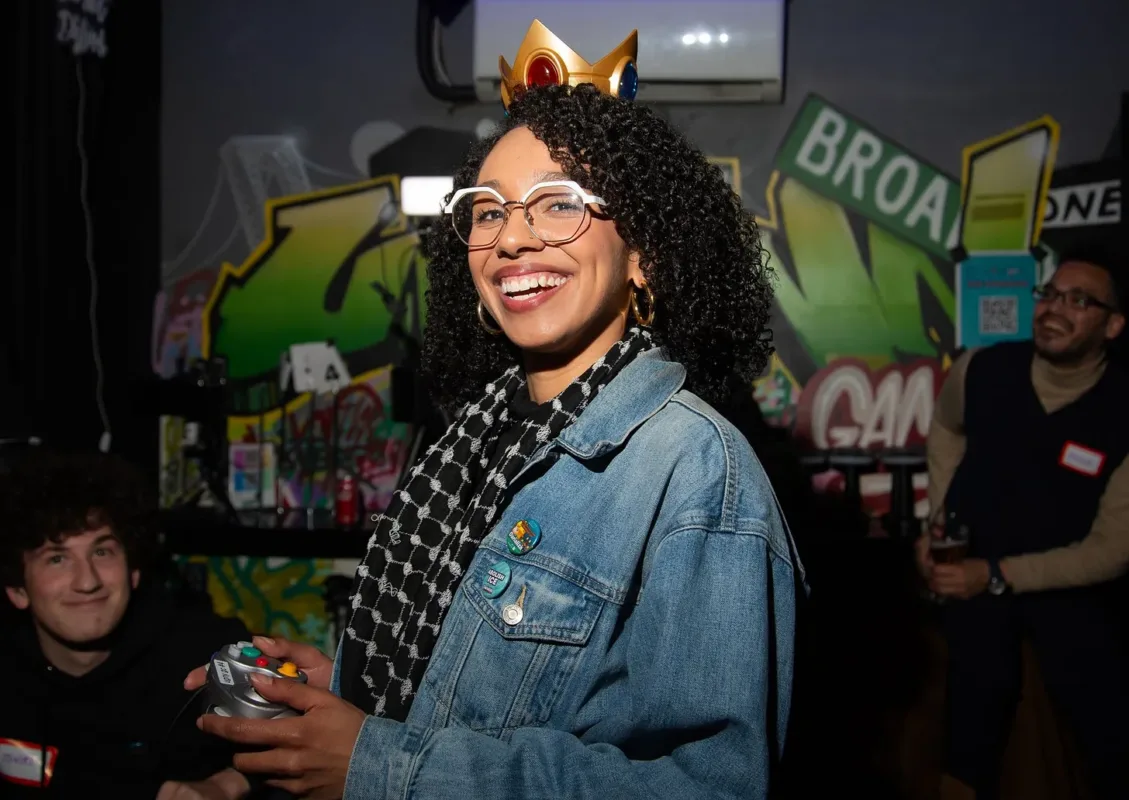
We still don’t know yet how large the blue tsunami was, but one thing is for certain: the election swept in Democrats of all ideological stripes, including six democratic socialists like Darializa Avila Chevalier, the representative-elect from New York’s 13th District but also 14 more conservative-leaning House like JoAnna Mendoza of Arizona’s 6th district, who were endorsed by the Blue Dog PAC. With the public demanding immediate blockage of Donald Trump’s extreme agenda, Democrats are sure to be unified in the beginning of the upcoming Congress, but eventually, the party’s ideological diversity is sure to cause conflict.
Such disputes are commonly expected, but they shouldn’t be inevitable. While there are real trade-offs as to which specific policies get pursued, the often maximalist and fatalist approach that each side of the party’s social democratic and neoliberal wings have usually followed is based on a false binary approach to politics which misunderstands the advantages that each faction of the party can bring to the other, especially during a time when the Trump administration has wielded executive powers. The biggest divisions in America today are over societal change more than ideology.
James Carville, the 82-year-old commentator who has not led a major campaign to victory since 1992, spoke for many within his liberal faction last month when he argued that “I would rather the Republicans keep the House by five than the Democrats to win by five because if that happens, they’re hostage to the DSA [Democratic Socialists of America.]”
Despite their strong disagreements with social democrats, Carville and other neoliberals haven’t realized that the new left’s view of politics as a mechanism for social change is explicitly ideologically neutral. People want politicians to actually make their lives better in important ways, not just to be slightly less awful that the radical right.
Although she’s only 32, Chevalier is among the most sophisticated of the newly elected Democrats, and she’s been crystal-clear about the origins and uses of political power.
“I think a lot of folks, because of the way Republicans use power, they conflate power with moral corruption or bankruptcy, but power is morally neutral,” Chevalier argued during an Oct. 2 appearance on the Hell Gate podcast. “Power-building for the sake of power-building, that is useless. We need power-building for the sake of changing people’s lives.”

Click image to load video. YouTube’s terms of service will apply when the video loads.
She returned to the topic in an Oct. 27 interview with Politico.
“It’s no longer just ‘oh the Republicans are bad.’ Yes, the Republicans are bad,” she said. “We need Democrats who are actually going to stand up to them, who are going to present a vision for how to move forward, a vision for how we address healthcare in this country, how we address childcare, how we address housing—all of the crises that people across this country are facing.”
While Carville blanches at the ideas of Chevalier and her colleagues, there’s no doubt whatsoever that lower- and middle-income Americans everywhere want someone, anyone, to do something about the rapid centralization of wealth and opportunity in our country.
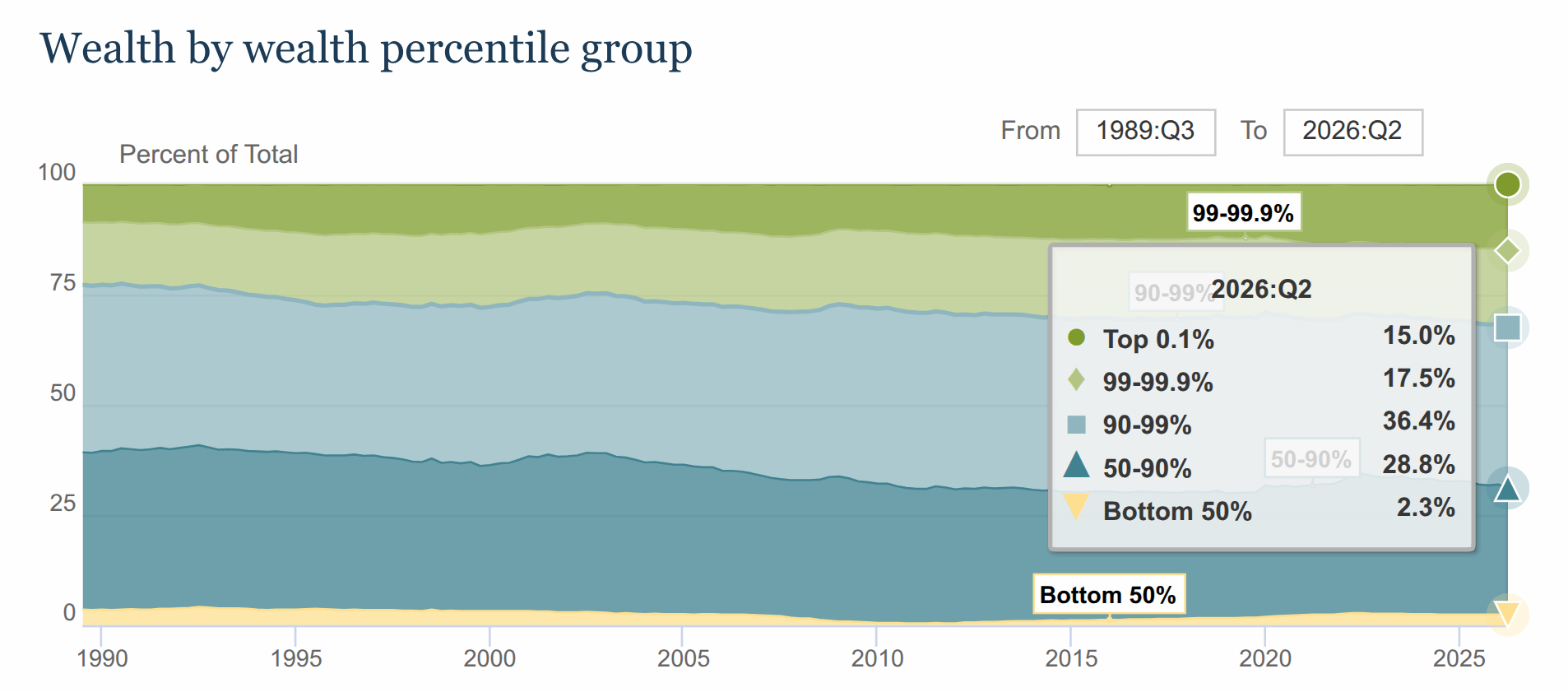
This is a very long-term trend. According to the Federal Reserve, the wealthiest 0.1 percent of Americans’ share of the nation’s personal wealth has nearly doubled from 8.6 percent in 1989 to 15 percent this past April. The bottom 90 percent’s share declined from 39.2 percent to 31.1 percent. And contrary to the reactionary right’s lies about welfare being a paradise, the bottom 50 percent of Americans have gone from holding just 3.5 percent of the wealth to even less: 2.3 percent.
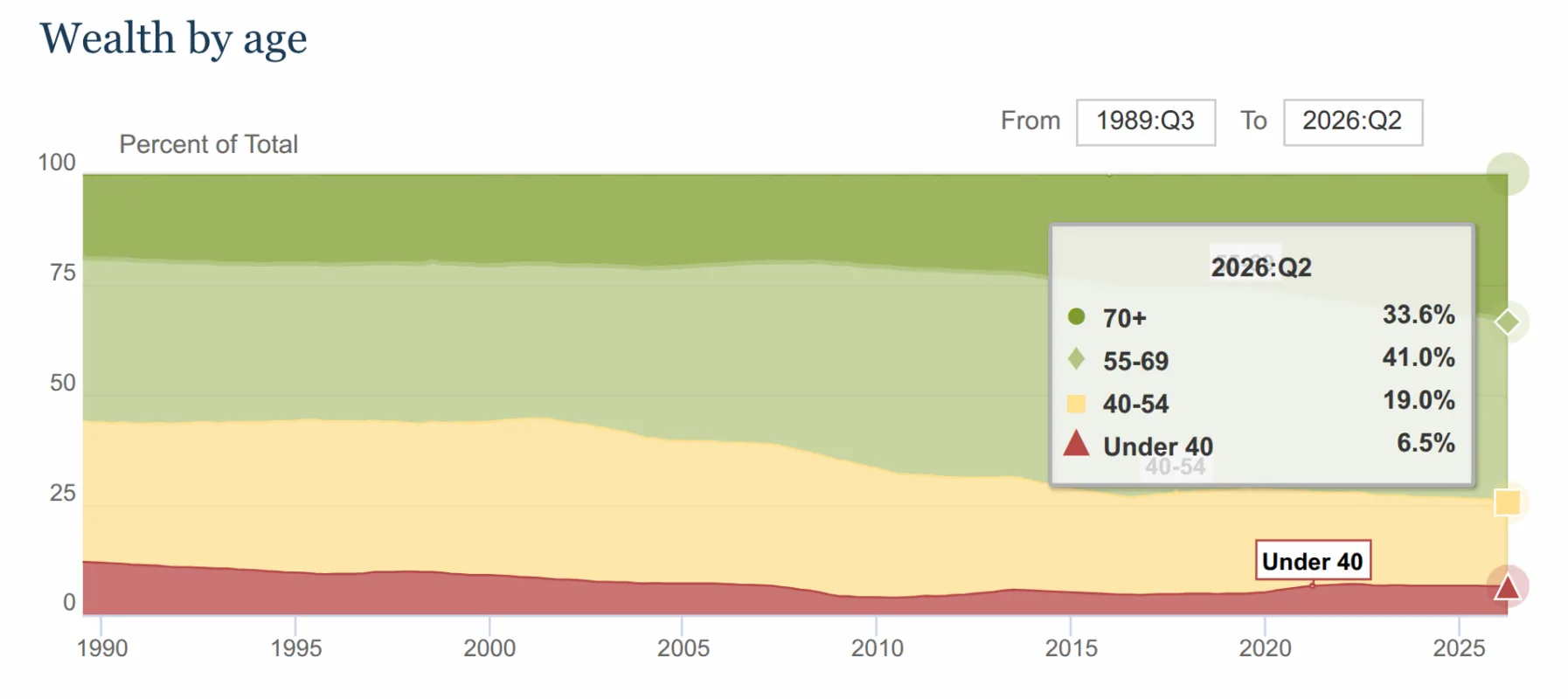
There is also a drastic age-based concentration of wealth that’s been happening as well. In the same Federal Reserve data, the share of America’s wealth held by people 70 years old and older has increased from 18.9 percent in 1993 to 33.6 percent this past April. By contrast, the share held by people 54 and younger has declined from 42 percent in 1989 to 25.5 percent in 2026. There is no doubt whatsoever that opportunity and wealth are being hoarded by people who need them the least.
The people have noticed the giant sucking sound in the economy. According to Gallup, there has not been a majority of Americans saying that the country was headed in the right direction since 2002. In a September 2025 Pew Research Center study, 65 percent of adults said that the U.S. economic system needed to be “completely reformed” or “needs major changes.” An even larger number, 77 percent, said that the political system needed to be “completely reformed” or “needs major changes.”
Despite such overwhelming support for major societal changes, however, the majority who said significant reforms were needed, 64 percent said they were not confident that they would happen.
The frustration and anger Americans have against a rigged society boiled over into the blue tsunami of 2026, but it was also what powered Trump’s two presidential election victories in 2016 and 2024.
He won because he constantly spoke about making big changes to society and to make America affordable again. In a 2016 poll by the University of Maryland, 52 percent of adults saw Trump as more likely to bring significant political change compared to just 37 percent who said the same of his Democratic opponent, Hillary Clinton. The survey also found that 72 percent of respondents said they wanted “significant change” to the American economic system, including 76 percent of independents.
By 2024, after the disasters and crimes of Trump’s first term, many Americans were skeptical of the change he would bring, but nonetheless, he was seen as an agent of it—a stark contrast to his Democratic opponent, Kamala Harris. In a Pew Research poll conducted shortly before the election, 40 percent of Harris supporters said that she would not change things much if she became president, compared to only 12 percent of Trump supporters who believed this about him. Backers of Trump overwhelmingly saw him as likely to bring positive change, with 86 percent saying this. By comparison, only 58 percent of Harris supporters said she was likely to bring positive change.
Americans realize the country is in bad shape and that major reforms are needed. Both Trump and Chevalier are right about this. Political leaders who will talk and work ceaselessly toward big changes are going to have a lot of leeway, contrary to the fears of Carville and other more timid Democrats.
Interestingly, there is one neoliberal Democrat who understands this, former Barack Obama chief of staff and Democratic National Committee chairman Rahm Emanuel. In a slew of media interviews promoting an offchance 2028 presidential campaign, he has made it clear as well that Democrats must have big ideas, even if they continue to support capitalism.
“There’s a bigger character piece to this than ideological,” Emanuel told the Associated Press. “There’s radical moderates and their profile and character speak to kind of fighting a system, which is what’s needed right now.”
This is exactly right. Americans want politicians with big ideas. The system has failed, and every Democrat should be willing to admit it—and act upon that realization.