About Theory of Change
Lots of people want to change the world. But how does change happen? History is filled with stories of people and institutions that spent big and devoted many resources to effect change but have little to show for it. By contrast, many societal developments have happened without forethought from anyone. And of course, change can be negative as well as positive.
In each episode of this weekly program, Theory of Change host Matthew Sheffield delves deep with guests to discuss larger trends in politics, religion, media, and technology.
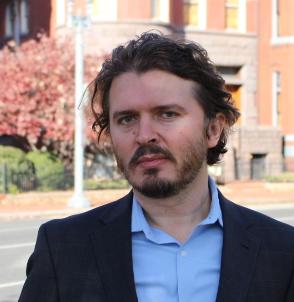
Podcast Host
Subscribe
Links
Support
Episodes
Technology alone cannot solve the problems of social media
David Adams, founder and publisher of OSNews, discusses the cyclical nature of technology and the implications of computing’s return to the network
How the ‘Steele Dossier’ confused the public and ended up helping Donald Trump
Journalist and author Barry Meier discusses how private spy agencies manipulate the media and intimidate whistleblowers for wealthy clients
The disinformation economy isn’t invincible, meet two women working to end it
Nandini Jammi and Claire Atkin of Check My Ads want to make publishing lies unprofitable, while also helping advertisers protect their brands
Trump supporters will make it difficult for the GOP to copy Glenn Youngkin
Never Trump commentator Jim Swift on why Trump and his fans won’t allow the Virginia gubernatorial candidate’s strategy to be copied
White nationalists and jihadists are starting to realize they have a lot in common
Extremism researcher Moustafa Ayad talks about how religious extremists from across the world are starting to come together, and what that means for the rest of us
Far-right Christians think they’re living in a Bible story, and that you are as well
Literature professor Christopher Douglas discusses the modern-day rewriting of Biblical apocalyptic literature as a justification for political extremism
Why is Republican obstruction assumed to be a fact of American politics?
Washington Post columnist Greg Sargent talks in-depth about trying to push Democrats to discuss Republican extremism, and how Donald Trump himself was harmed by it
Political extremism is a twisted mirror of elite failure
Author Nimmi Gowrinathan on the motivations of female militants and the origins of violent extremism
How Linux and open-source software took the computing world by storm
Programmer and entrepreneur Miguel de Icaza talks about how Linux went from a college student’s hobby to powering most of the world’s computers, and his own story as a free software developer
Ezra Taft Benson and the tangled history of Mormon and evangelical extremism
Historian Matthew L. Harris speaks about the critical role that Mormonism played in the development of right-wing American politics
Fighting disinformation is something everyone can do, and must do to protect our democracy
Fact-checker and rumor killer Brooke Binkowski talks about the history of falsehoods, and how to combat them
Why critical thinking is the long-term cure for disinformation
While combating specific false beliefs is important, in the long run, helping people learn to spot misinformation is the best way to counter it
How the ‘anger industrial complex’ works to monetize rage
Podcaster and former CNN reporter Michele Mitchell talks about how commercialized media and scheming politicians profit from making us upset and uninformed
The ‘Southern Strategy’ changed the GOP just as much as it did white Southerners’ partisanship
Author Angie Maxwell talks about how conservative Republicans were changed as they reconfigured their political strategy to appeal to white Protestants’ politics of grievance